We have been making shoes for difficult feet since 1938: malformations, amputations, leg length discrepancies, deformities. The aim is not to put something on your foot — it is to get you walking again.
Some feet will never fit a factory last. One leg shorter than the other, a partially amputated foot, a deformity no shoe respects, an ulcer that opens every time you put weight on it. That is what this workshop is for: we take your cast, we carve your last, and we build the shoe around your foot instead of the other way round.
This is not off-the-shelf orthopaedics. It is a craft that takes years to learn and is done by hand, on calle Royo Urieta in Zaragoza, with the same machines and the same judgement our grandfather used.
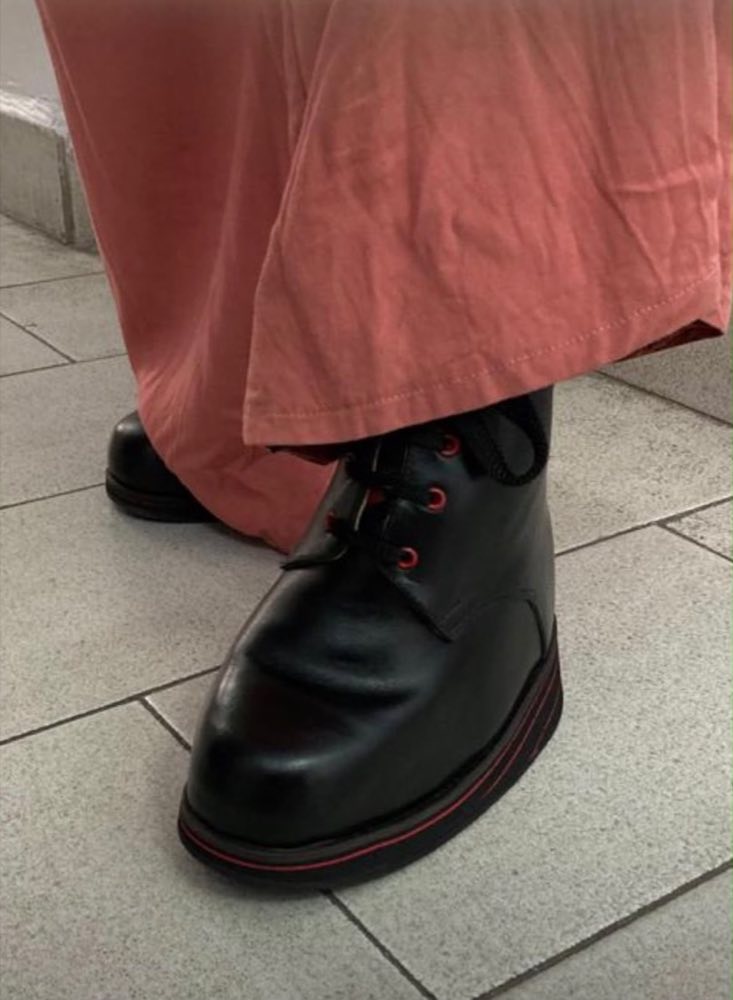
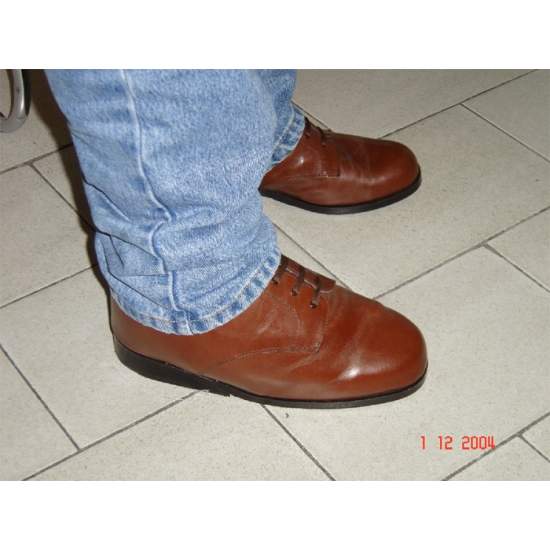
A finished compensating raise, out in the street and in use. That is what the work looks like when it goes well: like a shoe.
What we solve here
Leg length discrepancy: one leg shorter than the other
From the single centimetre you correct with a discreet raise to the twenty that mean rebuilding the whole shoe on a platform. We build it in cork and cover it in leather: it ends up firm, light and far more presentable than people expect. Compensating a discrepancy properly is not only about walking better today — it is about your hip and your back ten years from now.
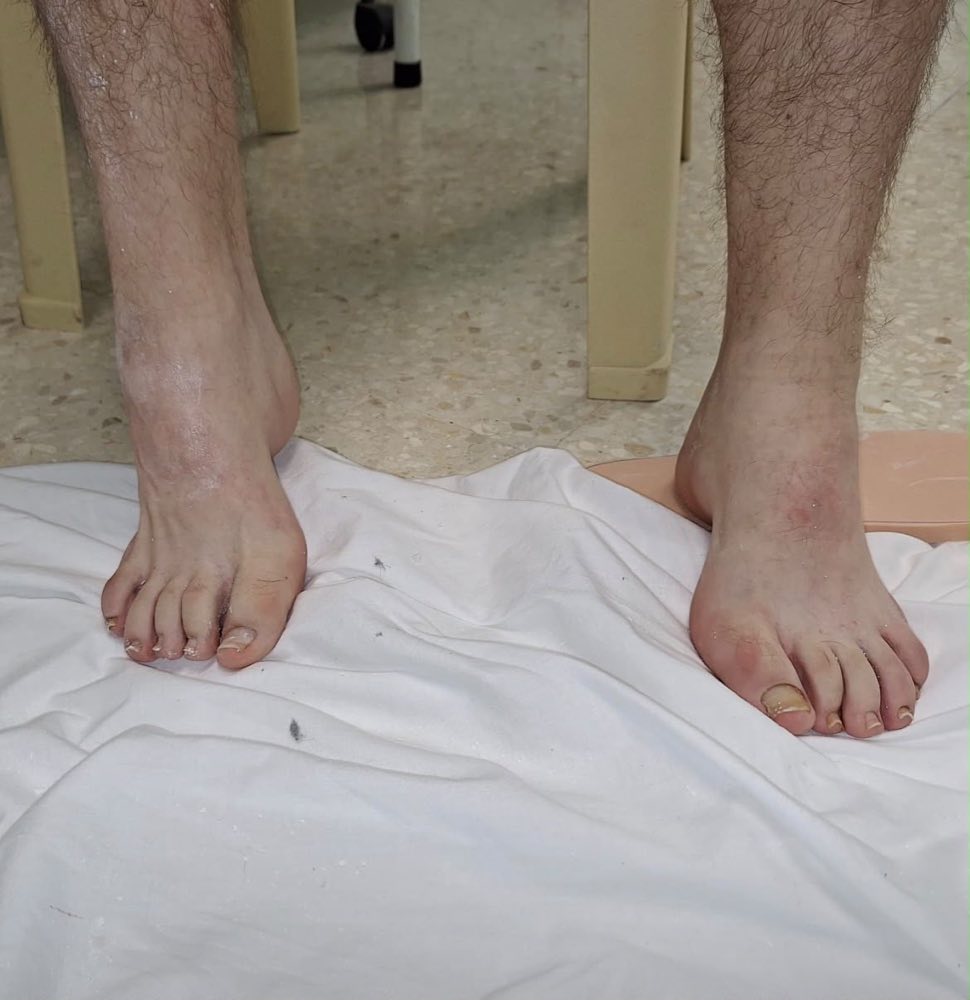
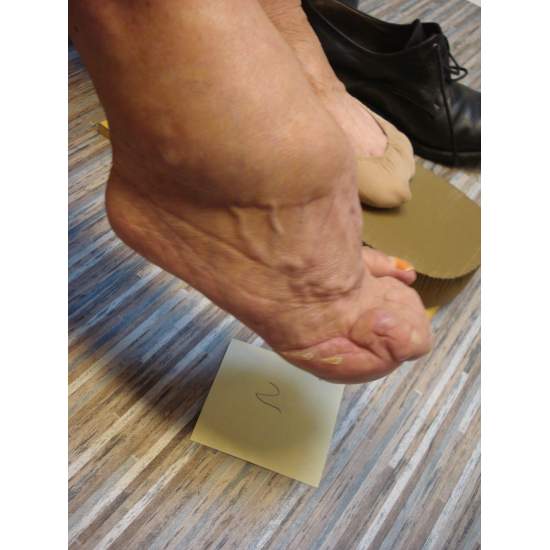
It all starts here: both feet together, bare, to see how big the difference is and how each one takes the weight.
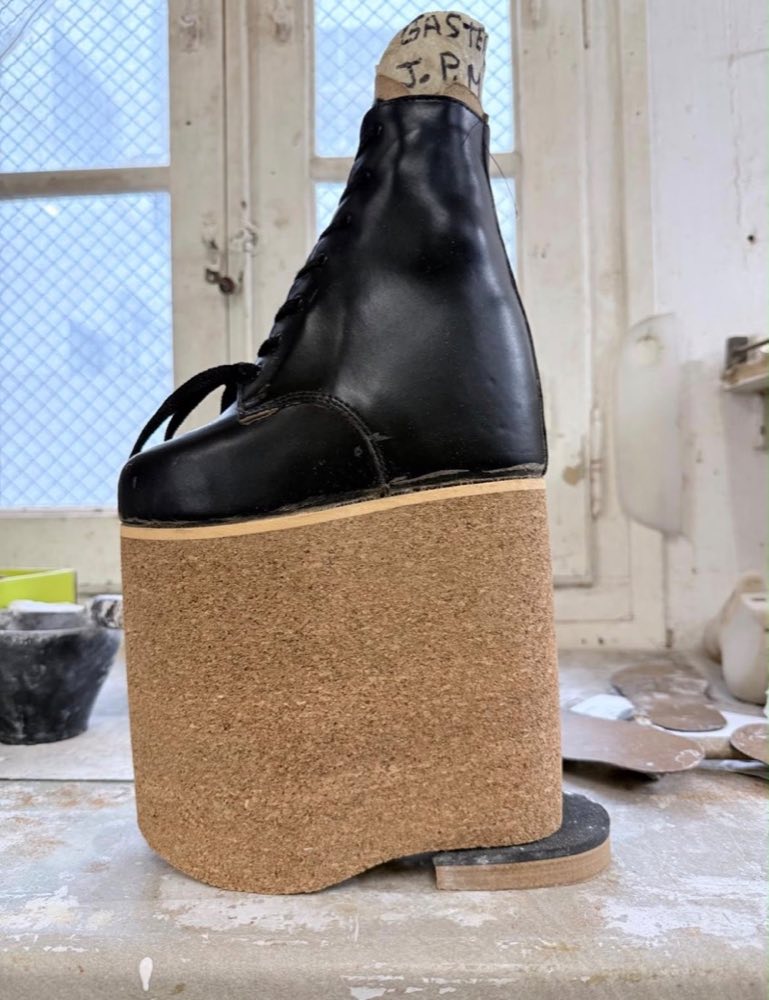
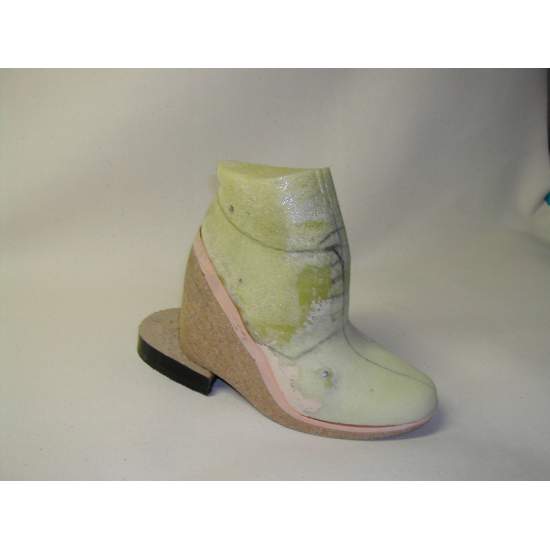
The carved cork, before covering. This is where the weight, the height and the path the foot will roll along are decided.
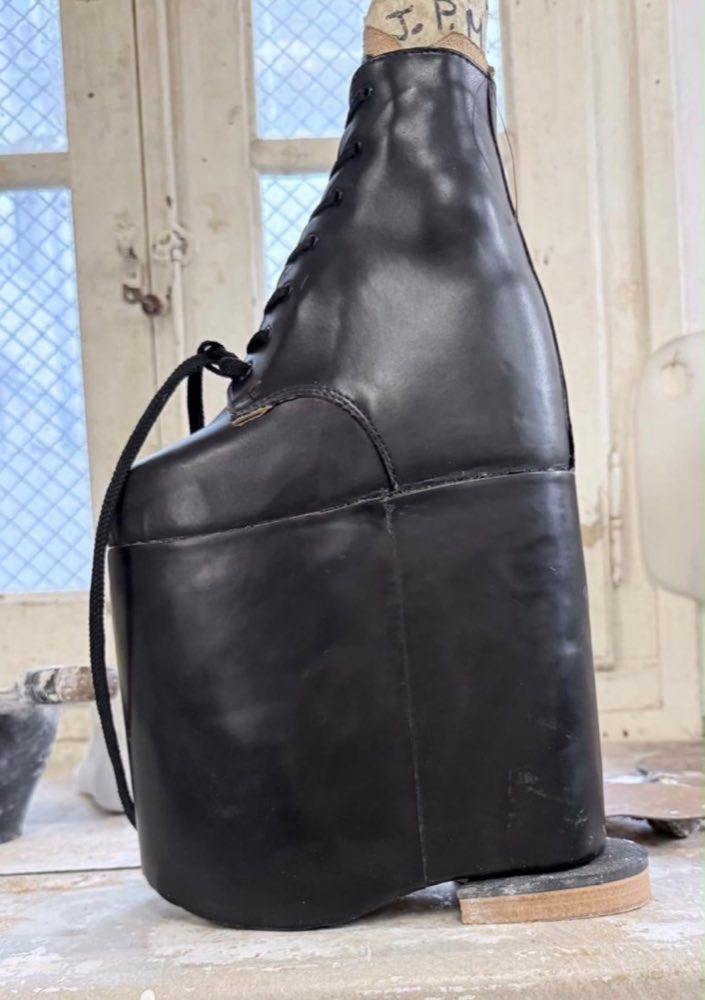
The same boot, finished. What would have weighed a kilo in wood weighs barely more than a shoe.
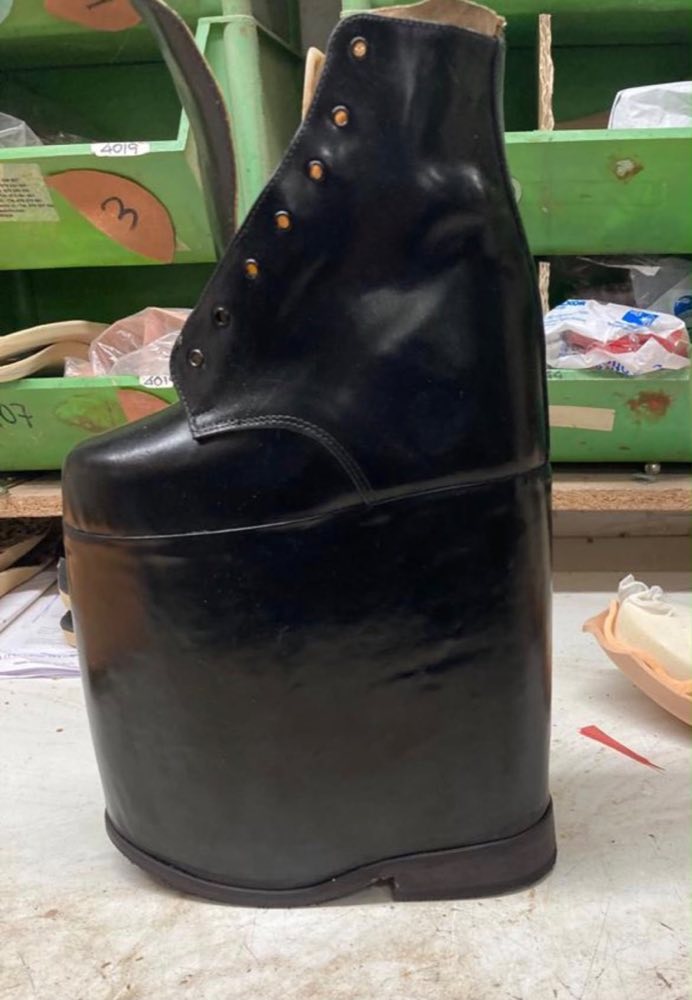
Extreme cases do exist. This one compensates a difference no catalogue shoe covers, and its owner walks out of the door in it.
Partial foot and amputations
When part of the foot is missing, the shoe has to hold what is left without punishing it, and fill the rest so the step stays stable. It is built short, with custom internal filling and reinforcement wherever the load asks for it.
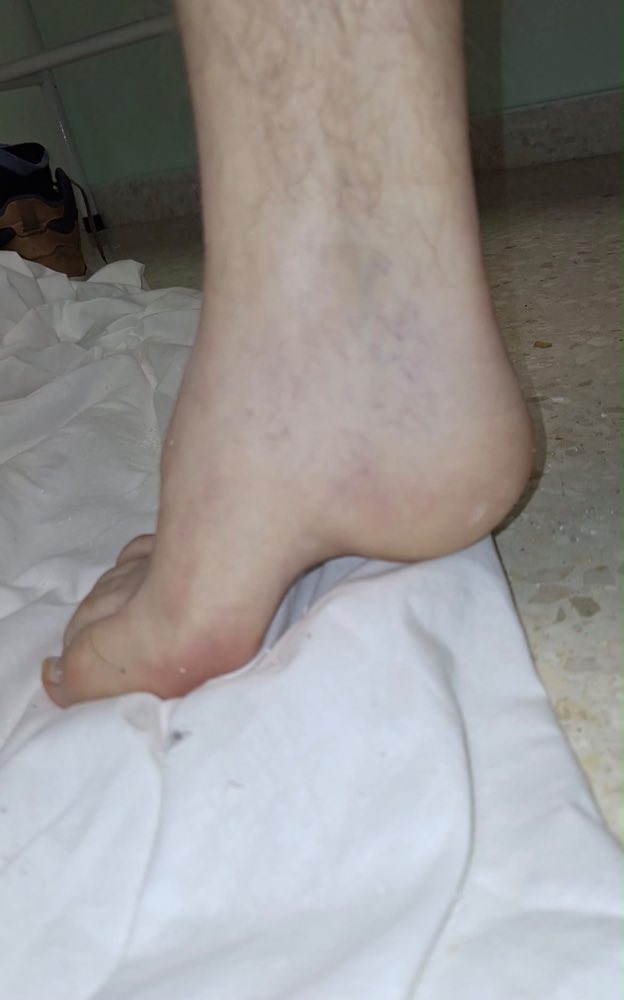
A foot like this fits no shop shoe, and forcing it in ends in a wound. The shoe is built to its measurements.
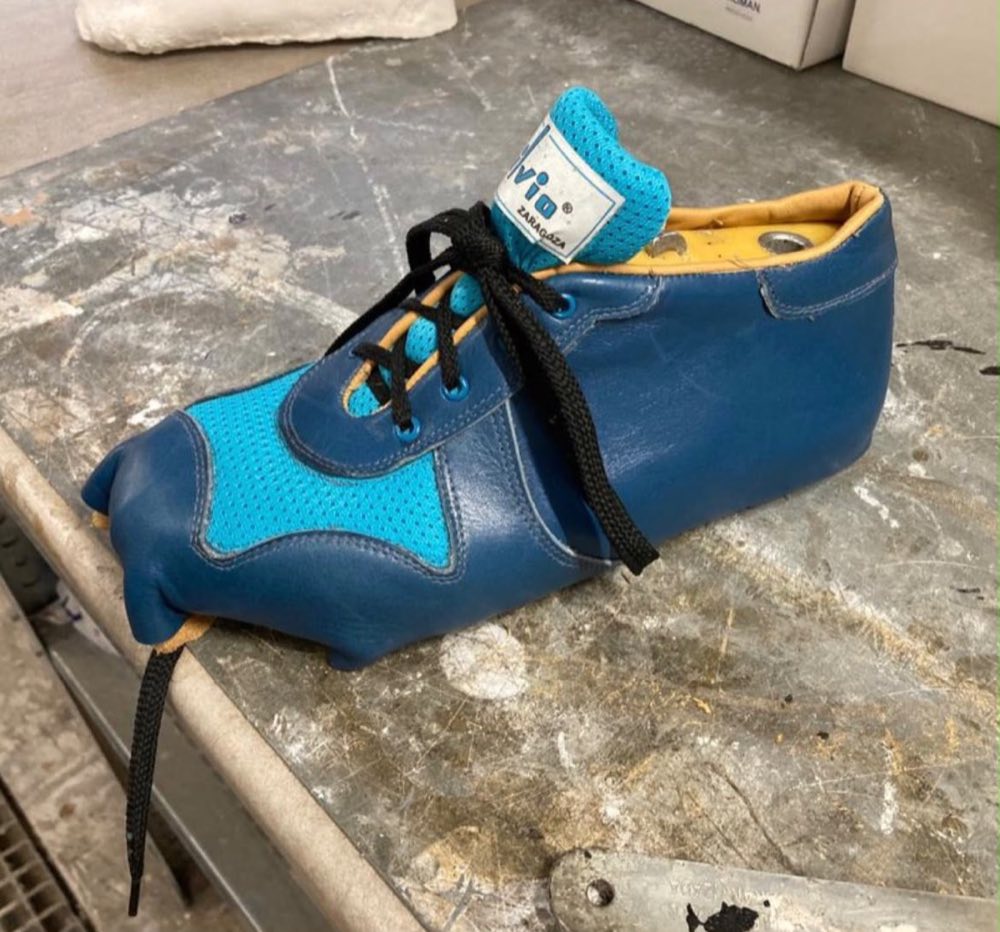
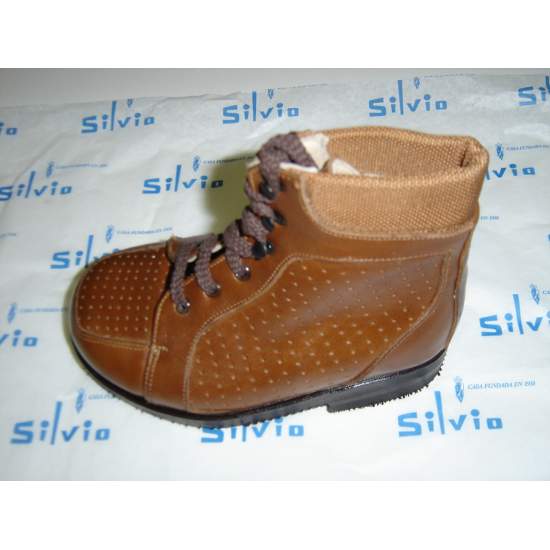
A shoe for a partial foot: short, with custom internal filling and reinforcement where the load asks for it.
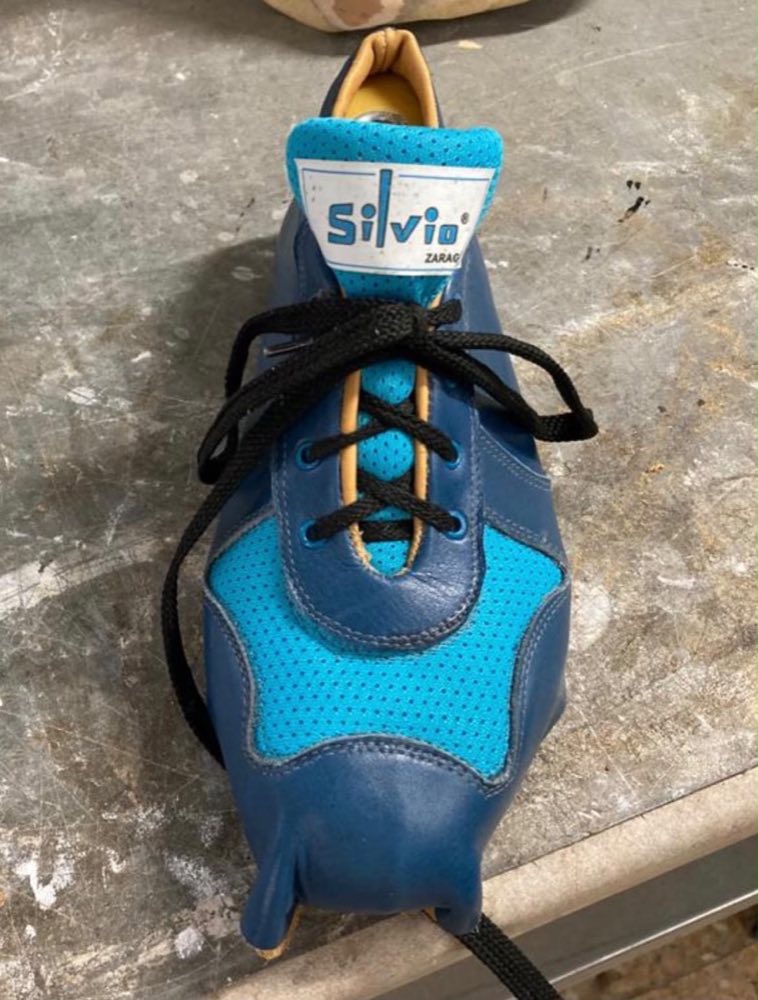
It leaves the workshop with our label stitched in. It has been there since 1938.
Deformities and feet at risk
Equinus foot, severe cavus foot, after-effects of surgery, advanced arthritis, diabetic foot at risk of ulceration. In these cases the shoe is designed to spread the pressure and to stay off the places it must not touch. What matters is not what you see from the outside — it is what happens inside.
Custom shoes that do not look custom
It is the question everybody asks us: "will people notice?" A good part of what leaves this workshop are ordinary street shoes, smart or everyday, that nobody would identify as orthopaedic. The correction is on the inside.
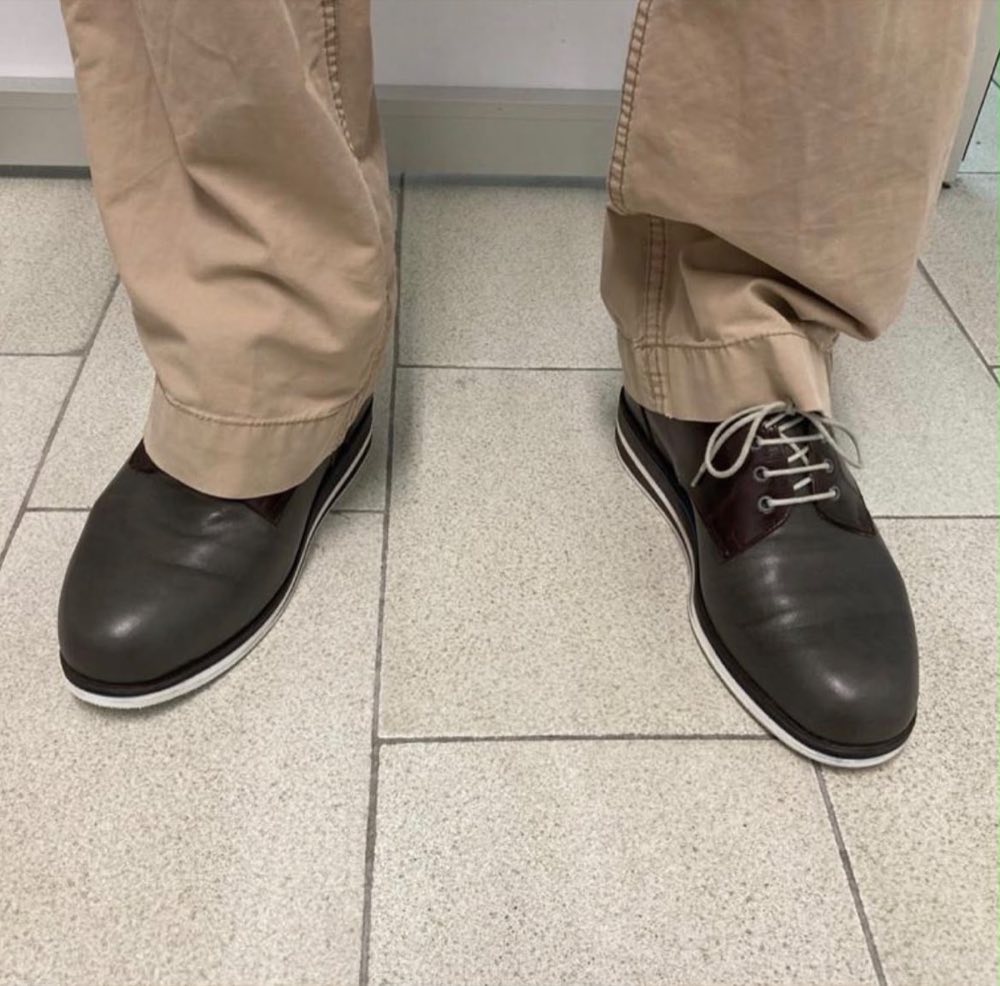
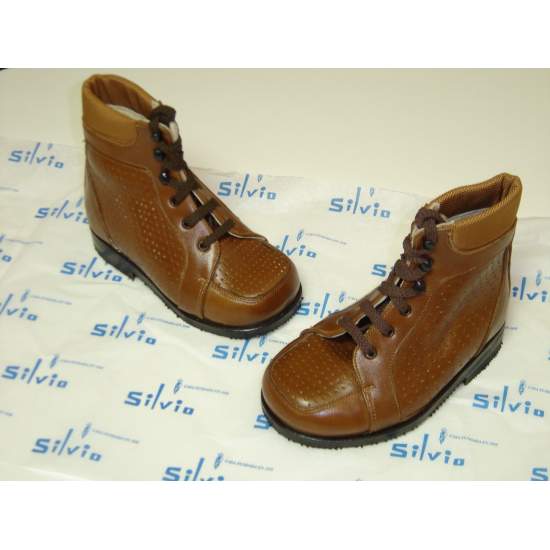
These two are made to measure. Nobody would say so, and that is the whole point.
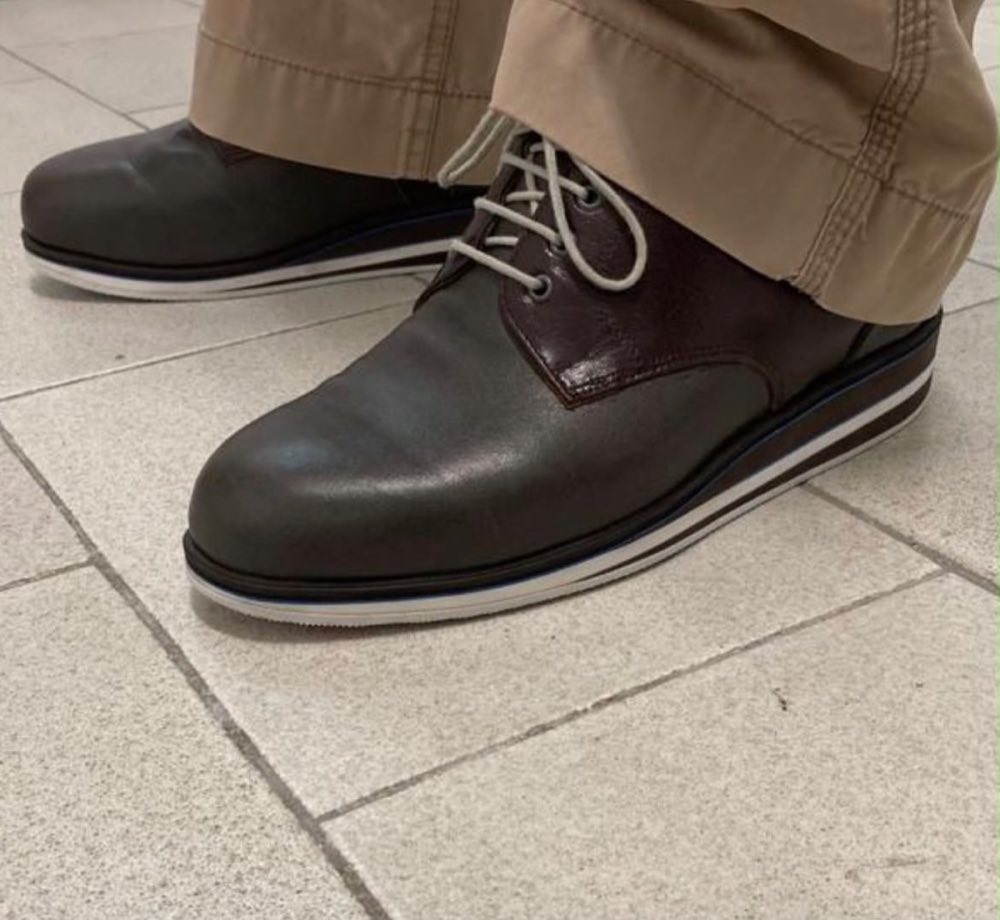
The correction is on the inside: the outside is a street shoe.
How a shoe of your own gets made
1 · We watch you walk
First we examine the foot and your gait, with your doctor's report if you bring it. That tells us what needs correcting and how far we can go.
2 · The cast
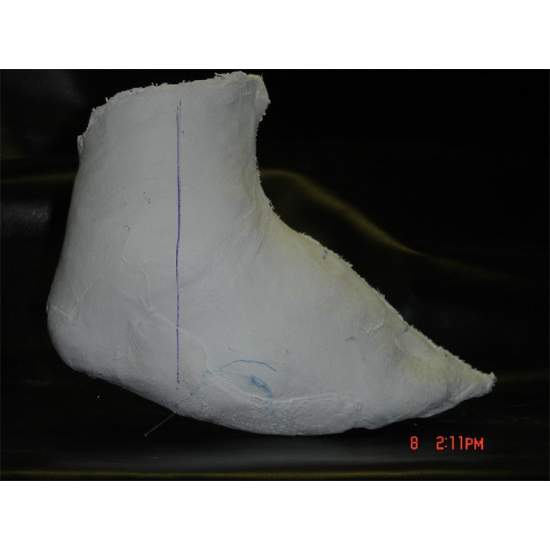
We take a plaster cast of your foot, weight-bearing or not depending on the case. Everything else depends on this one piece.
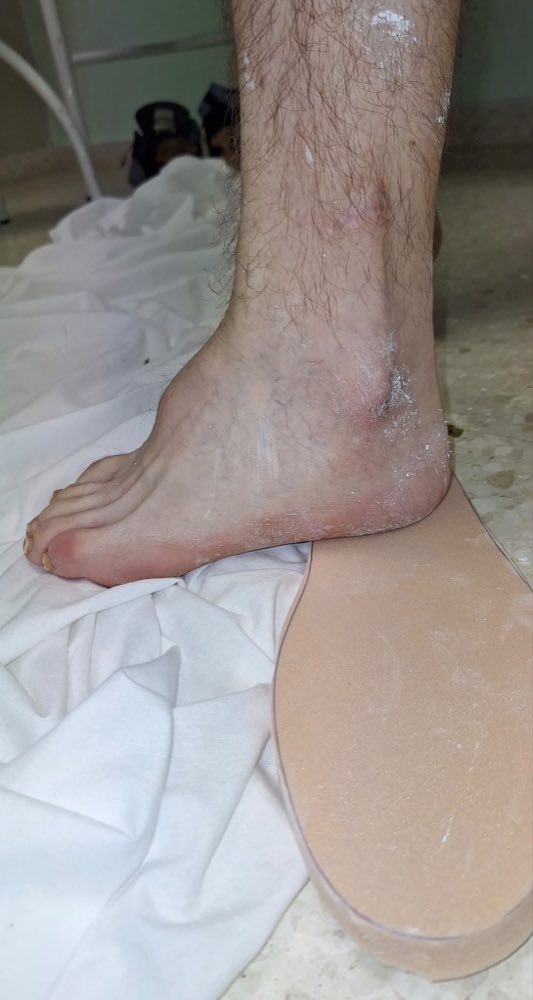
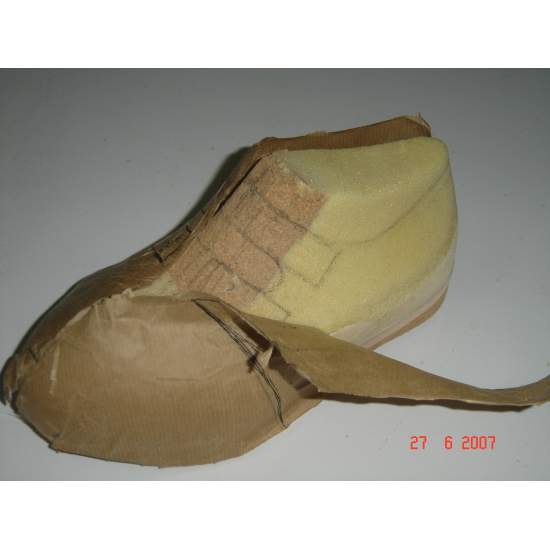
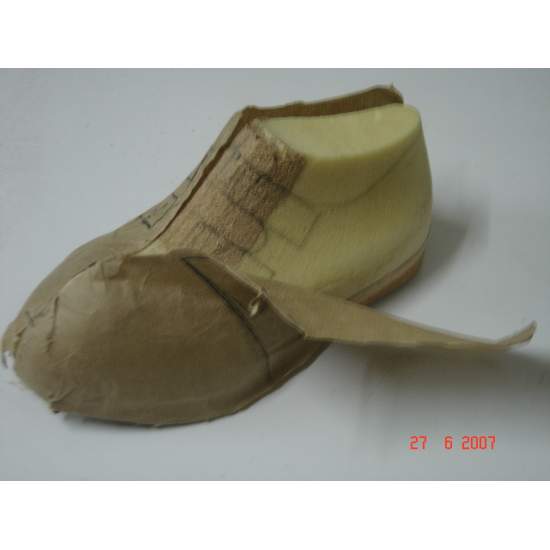
Your insole and your last come out of your cast. From here on, the shoe is yours and nobody else's.
3 · Your last
On that cast we carve a last that is yours alone, with your name on it. And it stays here: the second pair, and the one three years from now, come off the same last without repeating the process.
4 · A fitting before we finish
We assemble the shoe and you try it on before it is finished off. If anything rubs, pinches or leaves you unsteady on your feet, it gets corrected then and not afterwards.
5 · Handover and check-up
We hand it over finished and check it again a few weeks later, once the shoe has done some work. The adjustments at that check-up are included in the price.
What is worth knowing before you come
Timing. A custom pair is not made in an afternoon. Count on several weeks from cast to handover, with a fitting here in between.
Funding. Custom orthopaedic footwear is in the Spanish public health orthoprosthetic catalogue, with its own code. We tell you whether your case qualifies and under which code, and we prepare the paperwork: it is all explained under grants and allowances.
Prescription. To claim the allowance you need a medical prescription carrying the catalogue code. Ask us before booking and we will tell you who has to sign it in your case.
If you do not live in Zaragoza. The cast has to be taken here; there is no way of doing it remotely. But the fitting and the handover can be grouped into the same trip: call us on 976 225 883 and we will arrange it so you travel as few times as possible.
Come in wearing your own shoes
The best consultation is the one that starts by watching you walk. Come by the shop at calle Royo Urieta 5 and 7, in Zaragoza, wearing the shoes you use every day and, if you have one, your specialist's report. In a single visit you will know whether your case can be solved here, what it costs and how long it takes.
And if you are not sure this is what you need, call 976 225 883. Telling you that you do not need custom shoes is part of the job too.
If you are coming from outside Zaragoza: once you confirm the order, and on presentation of your travel receipts, we reimburse 100 % of that cost the first time, deducting it from the quotation.