Your cart
There are no more items in your cart
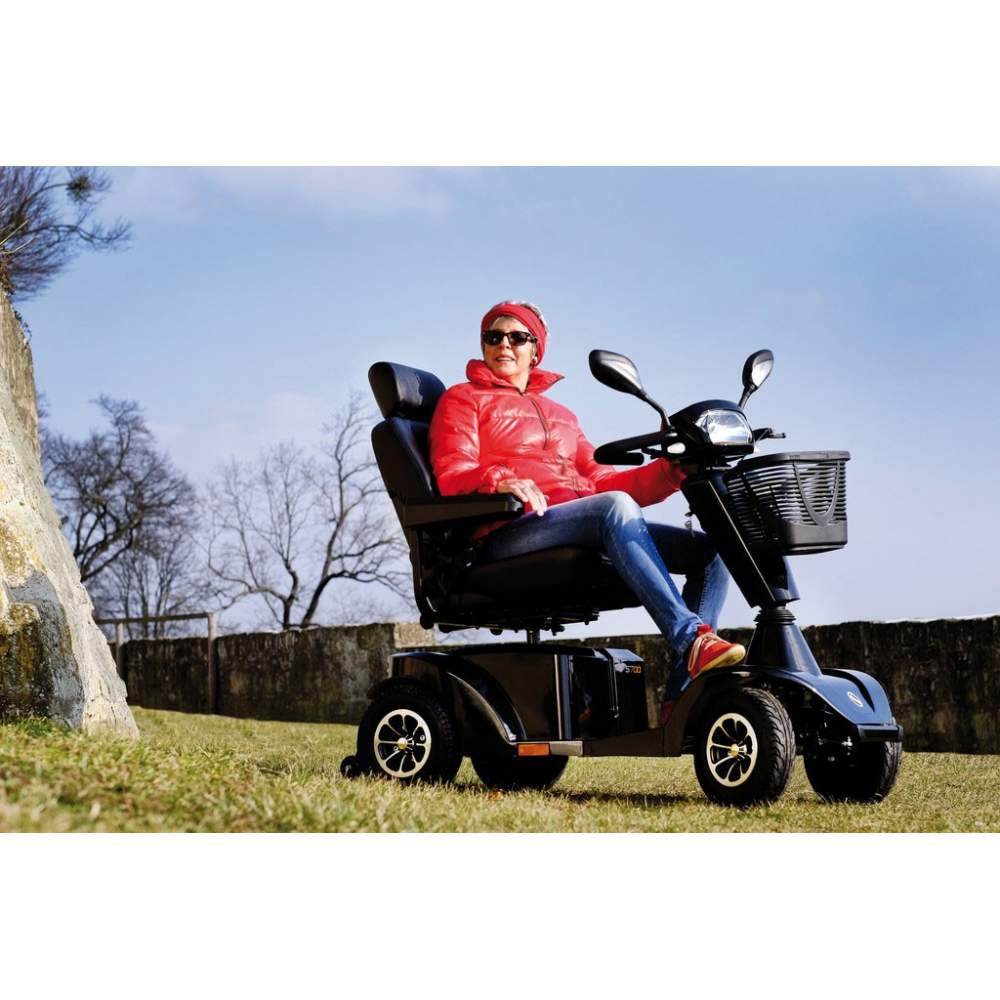
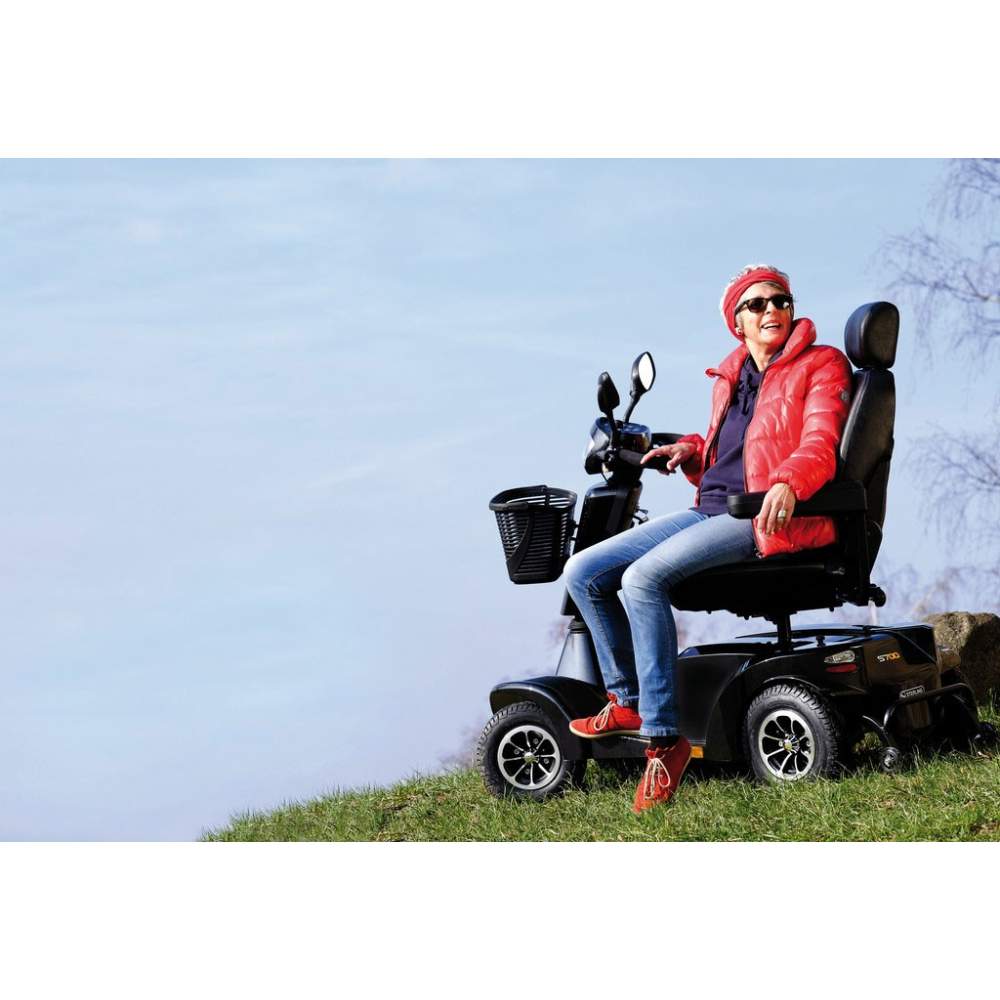
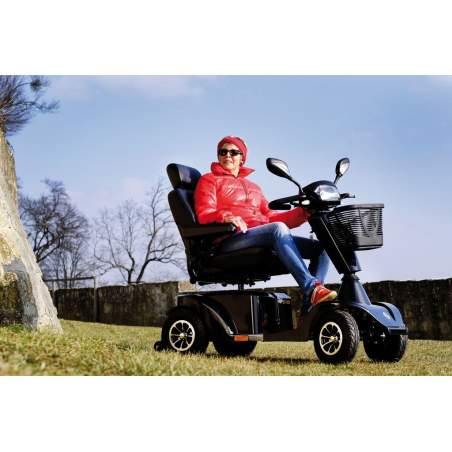
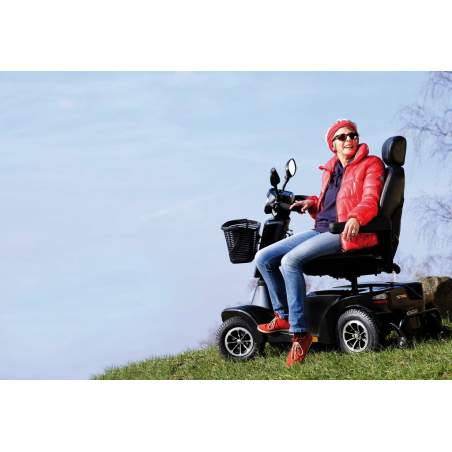
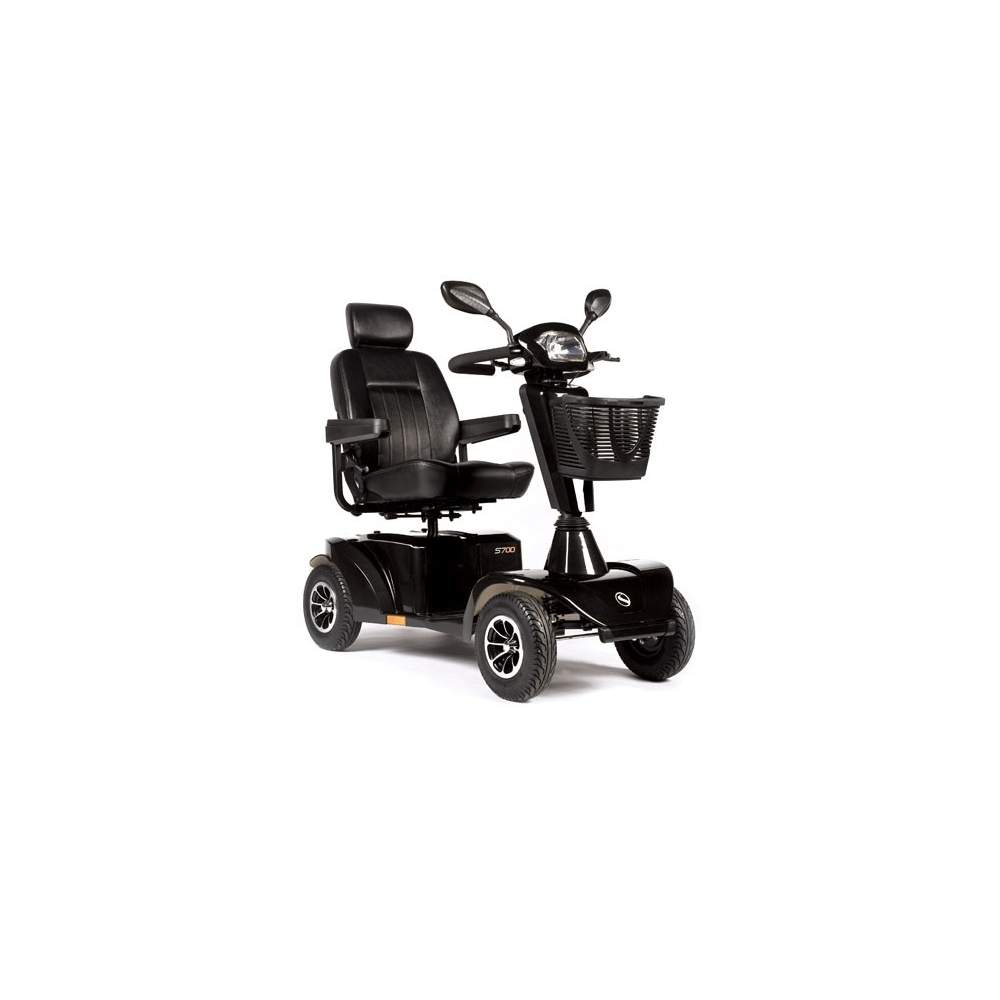
Sterling Sunrise S700 Scooter

Scooter S700
€2,743.80
Tax included
*
Delivery: 1 to 2 weeks (Europe)
The big one of the S series: 330 mm wheels, batteries of 75 Ah and independent suspension on all four wheels. Up to 35 km of range measured to ISO 7176-4, 15 km/h, 10º gradients, 10 cm kerbs and 160 kg of user weight.
The S700 is the big one of the S series: 330 mm wheels, batteries of 75 Ah and independent suspension on all four wheels.
It climbs gradients of up to 10º and kerbs of up to 10 cm, with a range of up to 35 km measured to ISO 7176-4 — not a brochure figure — and up to 15 km/h.
Approved for users of up to 160 kg.
35 km
range to ISO 7176-4
160 kg
maximum user weight
330 mm
wheels
4 wheels
with independent suspension
A range measured to a standard, not estimated
The S700's 35 km are measured to ISO 7176-4, which is the standardised range test for chairs and scooters. That makes it genuinely possible to compare models, which catalogue figures without a standard do not.
In real use, with hills, cold and starts, count on less. But the starting point is comparable.
Independent suspension on each wheel
Each wheel has its own system. On rough ground, that keeps all four in contact with the surface instead of leaving one in the air.
It translates into traction and into the seat moving a good deal less.
Ten degrees of gradient
That is a high figure for a scooter and it has to be read properly: ten degrees is roughly a 17-18 % gradient, a serious urban hill.
As on all scooters, the gradient you can safely manage with a low battery is always less than the catalogue maximum.
Orthoprosthetic funding (Spain)
This product is not in the orthoprosthetic funding catalogue
Mobility scooters are not in the orthoprosthetic benefit catalogue, so none of them is funded by the health service. What is in the catalogue, in the same family, is the power wheelchair (code SRE 000A, with prior approval). If what you need is funding, that is the route. How Spanish grants and funding work.
Where can you travel on a scooter?
On the pavement and in pedestrian areas, and always at walking pace. The Spanish Traffic Act expressly names the motorised wheelchair within the definition of a pedestrian; it says nothing about the mobility scooter under that name, but in practice the same criterion is applied when it is used by a person with reduced mobility and travels at pedestrian speed. No licence and no number plate are needed.
And this model is fast: on the pavement you have to turn the speed selector down and keep the top speed for the cycle lane, the wide promenade or a village road with no pavement. If you have doubts about your town's by-laws or about insurance, ask us: we will tell you what we know and what we do not.
330 mm
Wheels
75 Ah
Batteries
up to 35 km (ISO 7176-4)
Range
15 km/h
Top speed
10º
Maximum gradient
160 kg
Maximum user weight
It is the largest of the S series: check where you store it and how it gets in before ordering it.
We have been at this since 1938.
Can you fly with this model?
Yes, and what is more your chair or scooter travels free: on flights within the European Union mobility equipment does not count towards your baggage allowance. What decides the paperwork is the battery:
- Gel or AGM · the easy case. No watt-hour limit, checked in with the unit. The sealed-battery declaration is needed.
- Lithium, up to 300 Wh · with its UN 38.3 certificate. It usually travels fitted to the unit; if the airline asks for it to be removed, it goes with you in the cabin.
- Lithium, above 300 Wh · it can fly, but the airline adds precautions (a fire-resistant bag, or the battery at 25 % charge), and if it insists on removing it there is a ceiling.
To tell you which of the three you are in we need to see the battery of your unit: many models are supplied with a gel or a lithium battery depending on the version. Call us on 976 225 883 or on 659 38 38 38 with the serial number, or send us a photo of the battery label, and we will tell you the exact wattage and get you the manufacturer's certificate.
Before buying your ticket, read how to fly with a power wheelchair or a scooter: the three battery cases, the paperwork and the 48-hour notice to the airline.
Full technical specification
Type: an outdoor electric scooter, 4 wheels
Wheels: 330 mm
Suspension: independent on all 4 wheels
Batteries: 75 Ah
Range: up to 35 km to ISO 7176-4
Maximum speed: 15 km/h
Maximum gradient: 10º
Maximum kerb: 10 cm
Maximum user weight: 160 kg
Lighting: approved LED lights, standard across the S series
Health service code: scooters are not in the Ministry's catalogue
Manufacturer: Sterling, by Sunrise Medical
Frequently asked questions
Is it the right one if I weigh 150 kg?
It is approved up to 160 kg, so yes, and it is one of the few scooters that reaches that figure.
What is the difference from the S425?
Size and capacity: the S425 has 300 mm wheels, 55 Ah batteries and reaches 12 km/h. The S700 is bigger, faster and with more range.
Is it any use on a dirt track?
For a compact track and a park path, yes, with its 330 mm wheels and suspension on all four. For real off-road you need the all-terrain ones: Extreme X8 or Frontier V6.
How long does it take to charge?
A few hours; the usual thing is to leave it overnight. With 75 Ah a full charge is not a quick job.
Configure your scooter
Everything you choose here is added to the price above. Anything you leave alone comes as standard.
S series scooter accessories
You can tick several, and remove them by pressing again.
 Storage cover+ 120,00 €Add
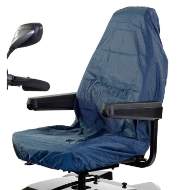 Seat cover+ 55,00 €Add
 Leg cover+ 129,00 €Add
 Rain cape+ 160,00 €Add
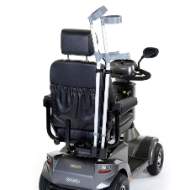 Walking-stick holder (seat-mounted)+ 125,00 €Add
 Walking-stick holder (rear-bumper-mounted)+ 55,00 €Add
 Oxygen-cylinder holder (seat-mounted)+ 115,00 €Add
 Backpack and armrest storage pocket+ 120,00 €Add
 Holder for walkers or folding chairs+ 250,00 €Add
 External charging kit (wiring to charge the batteries off the scooter) (batteries and charger not included)+ 88,00 €Add
 Emergency warning triangle+ 95,00 €Add
 Heavy-duty rear suspension kit+ 20,00 €Add
 Solid tyre kit (set of 4)+ 750,00 €Add
Official dealer
and service centre
Sunrise Medical, the maker of Quickie, Breezy, Zippie, JAY and Sunlift.
New product
1 Reviews
Scuter
Es a lu ci nan te,estoy encantado,cuando me la trajeron mis hijos a casa me emocione mucho,es preciosa y grande,justo lo que yo queria.
De regalo me vino una funda para taparla que esta muy bien.
Product Options
Tap to zoom