Your cart
There are no more items in your cart
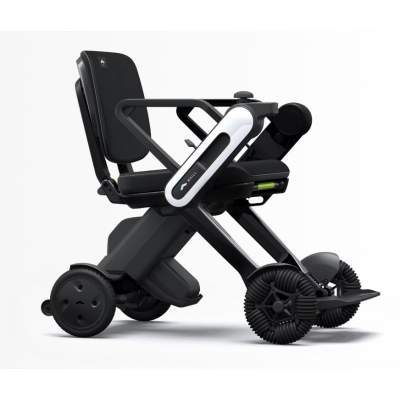
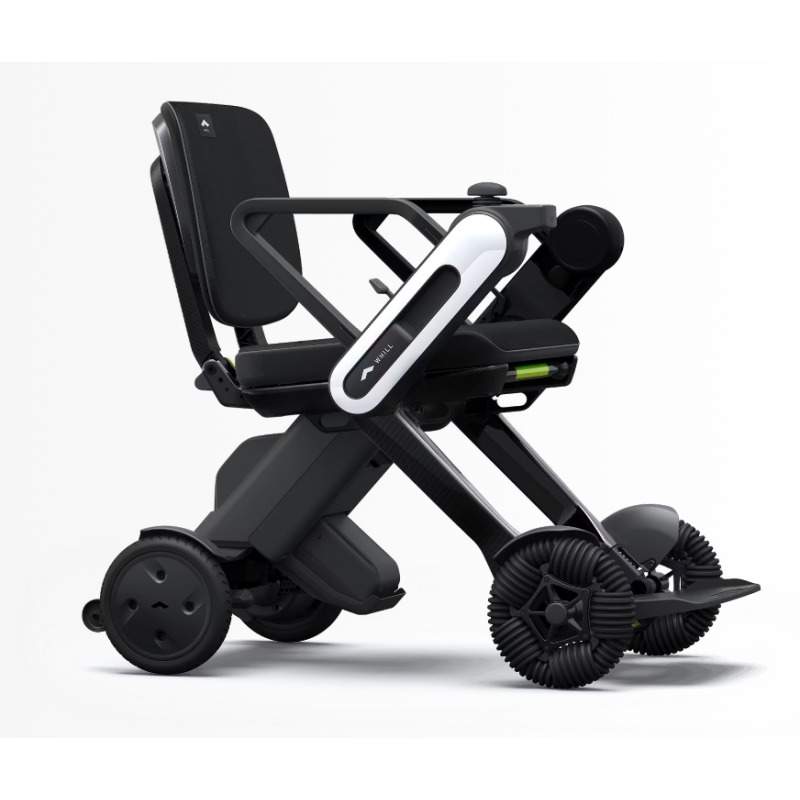
WHILL Model C2 Lite Carbon Electric Wheelchair

Silla Model C2 Lite SRE 000 A
€3,200.00
Tax included
*
Delivery: 1 to 2 weeks (Europe)
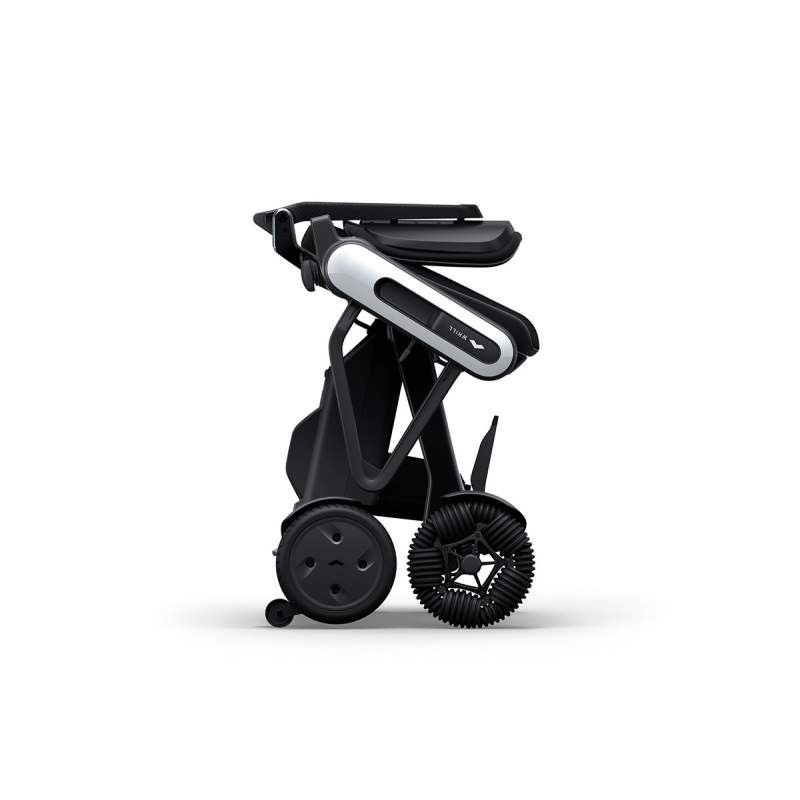
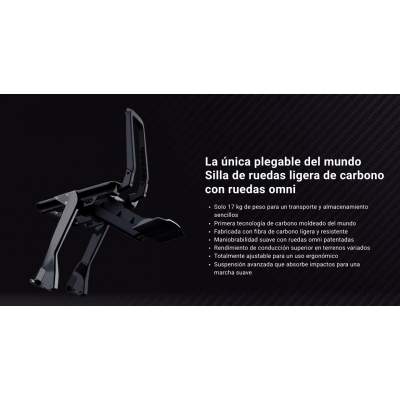
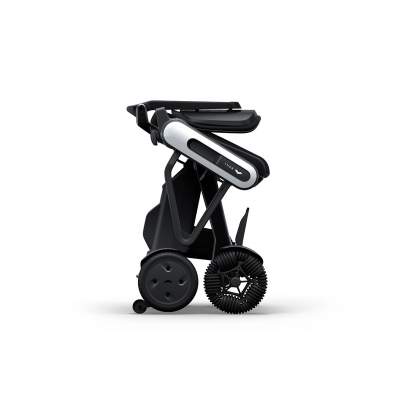
Folding electric wheelchair WHILL Model C Lite, carbon fibre, 17.8 kg and omnidirectional front wheels. It folds in two seconds with one hand.
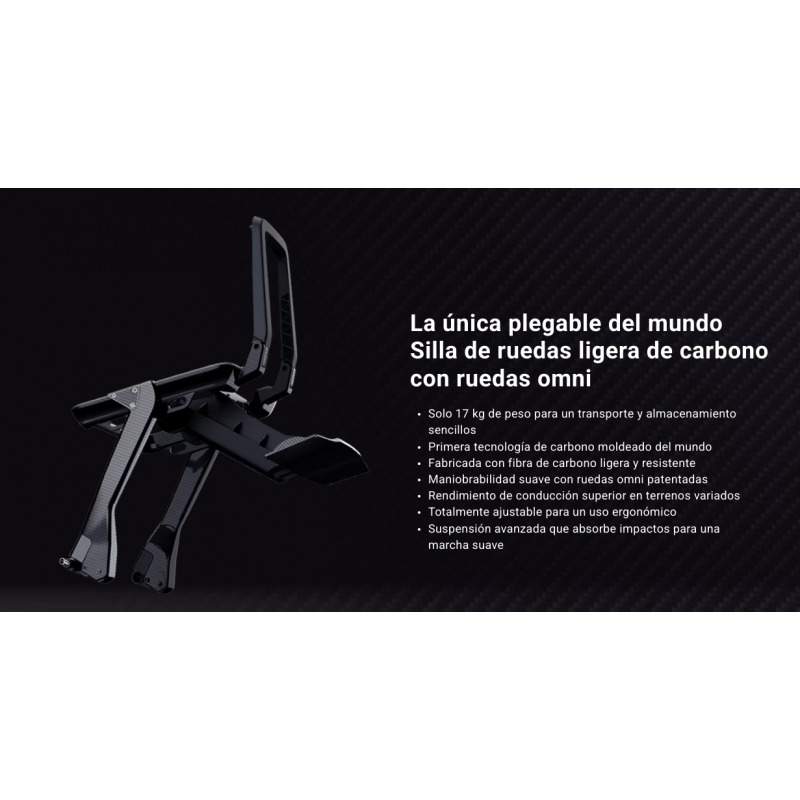
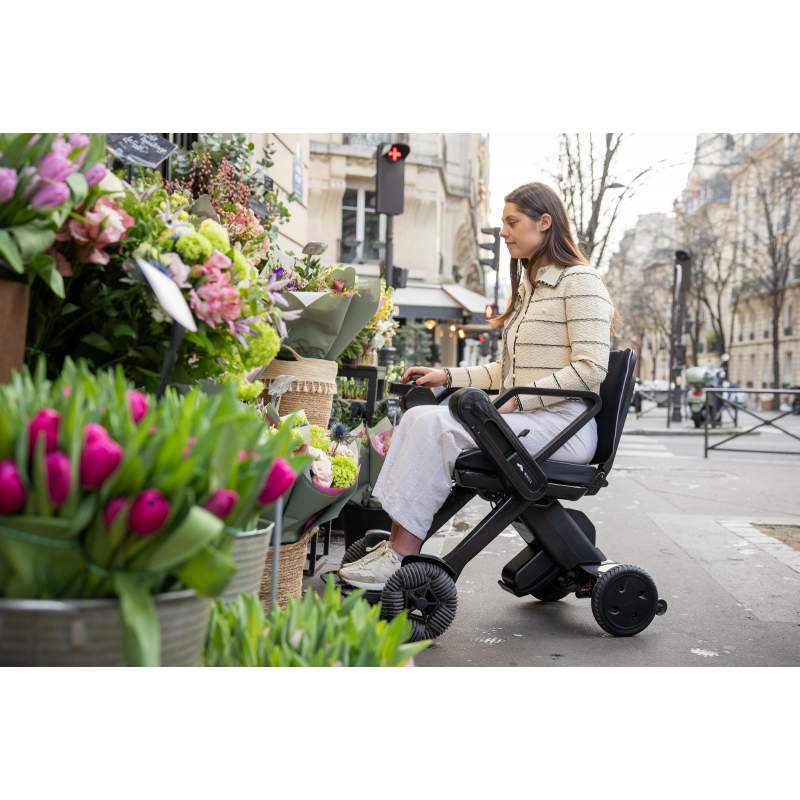
The WHILL Model C Lite is the folding version of the Model C: the same moulded carbon-fibre chassis, the same omnidirectional front wheels and the same Japanese engineering, but brought down to 17.8 kg and able to fold in two seconds with one hand. It is the chair we recommend to anyone who wants to carry it in a car boot, store it in a narrow cupboard or take it on a plane without fuss, without giving up the manoeuvrability of a top-of-the-range chair.
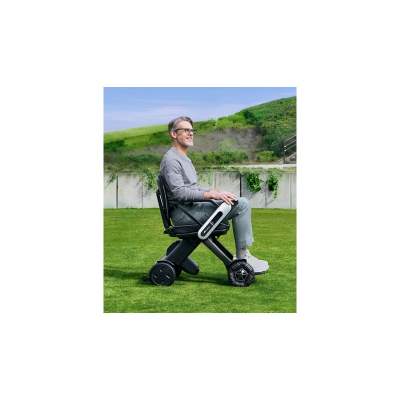
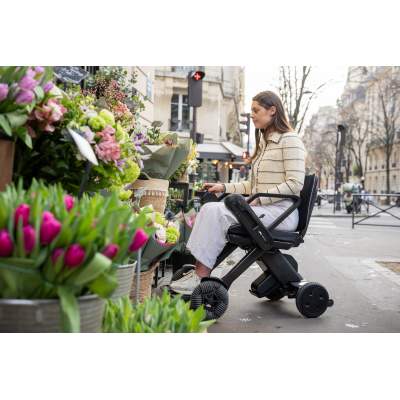
It is not the cheapest chair in the catalogue, nor do we recommend it for rough ground or days of many kilometres in a row: the non-folding Model C, which is sturdier, is there for that. The Lite is built for everyday life — the street, the shopping centre, a restaurant, a family visit — and for anyone who values folding and unfolding it themselves, with no help, as often as needed.
17,8 kg
Weight (without battery)
23,4 km
Range
136 kg
Maximum user weight
SRE 000A
Health service code


This is how it folds and how it moves
Two seconds, one hand, no bending down: that is how the Model C Lite folds, and it stands up on its own once folded. If you would rather see it moving before deciding, this is the manufacturer's official video:
Why this chair and not another
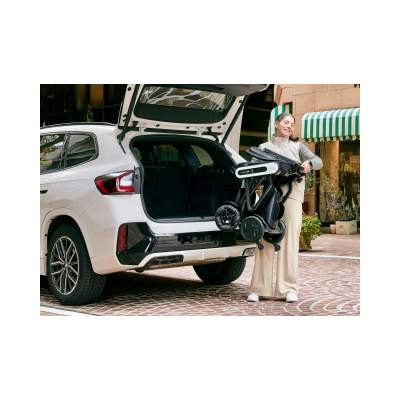
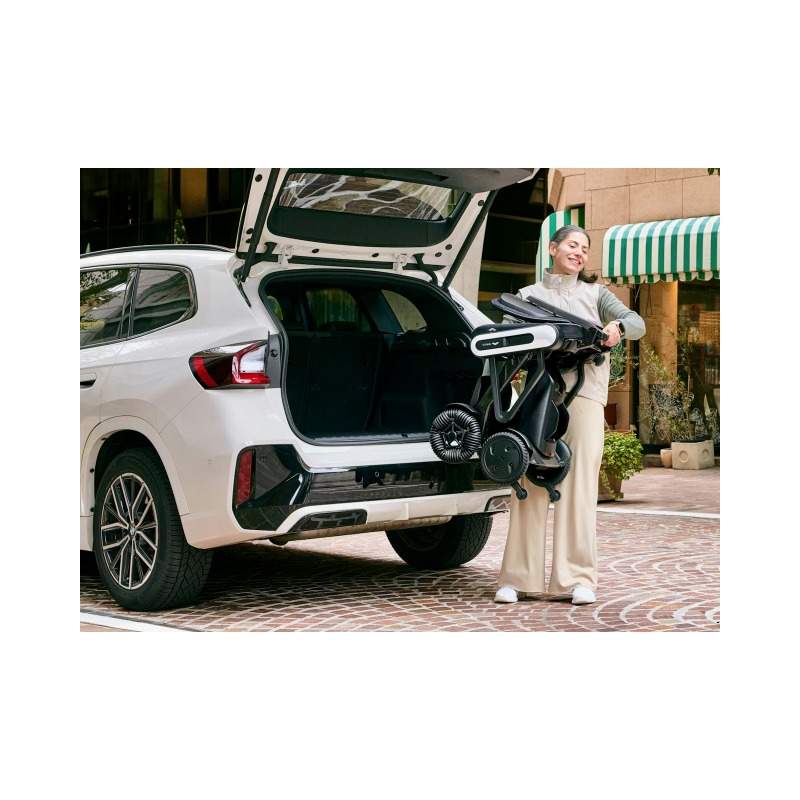
It folds in two seconds and fits in any boot
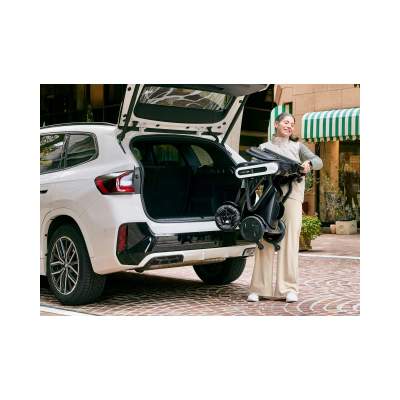
The new mechanism needs no bending down and no second hand: one movement and the chair is compact and standing on its own, ready to go into the boot of a small car without forcing it or taking anything apart. At 17.8 kg it is one of the few electric chairs a person of average build can load alone, with no help from an attendant.
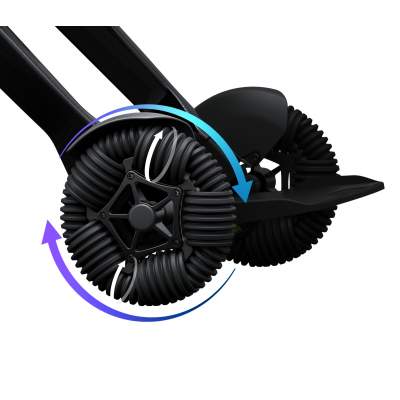
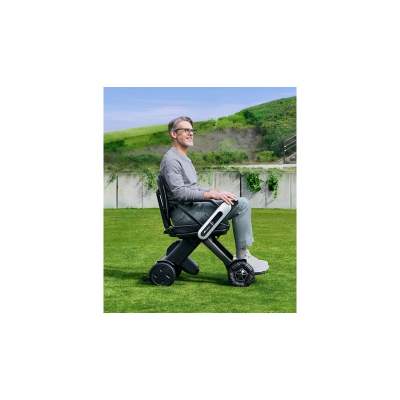
Omnidirectional front wheels: it turns on the spot
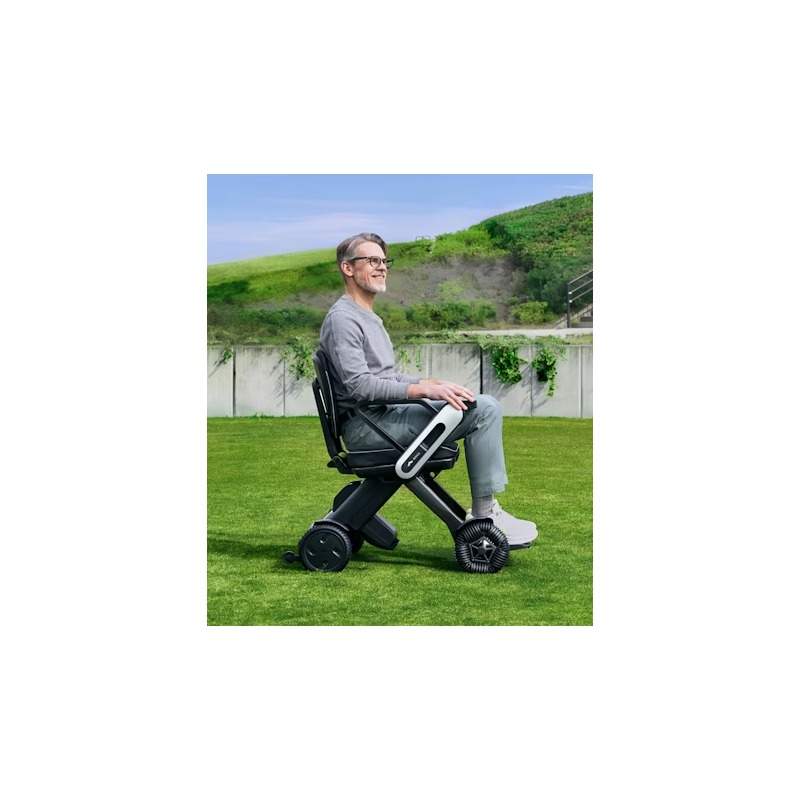
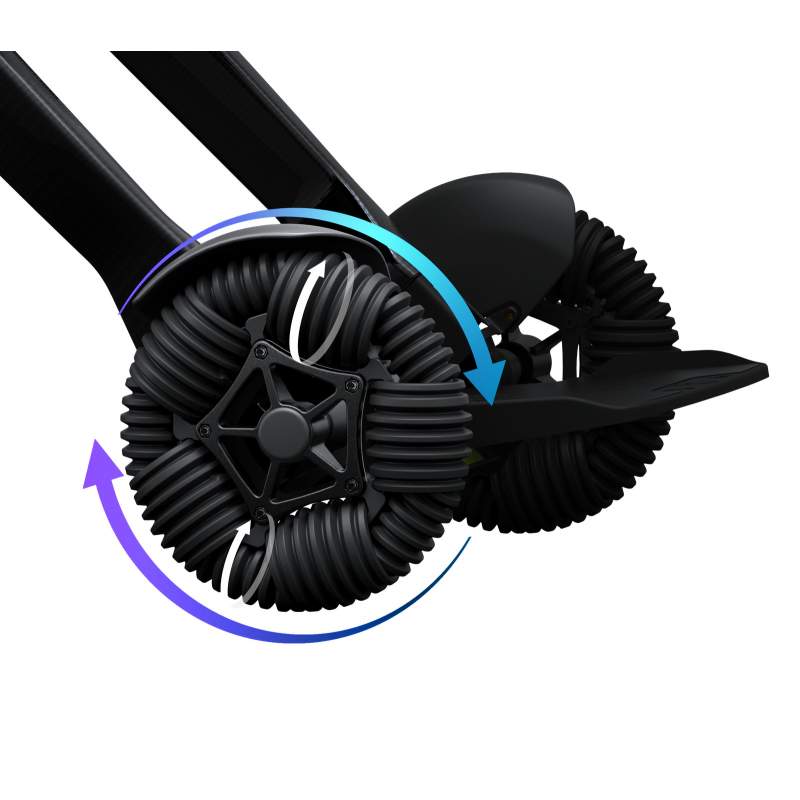
Instead of a conventional front wheel, it has a set of rollers that allow sideways movement as well as forwards. The result is an 81 cm turning radius: enough to turn round in a narrow corridor, a lift or between restaurant tables without several manoeuvres.
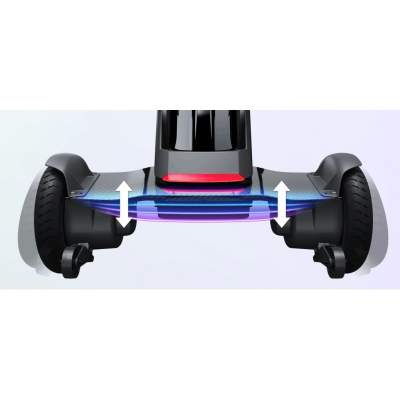
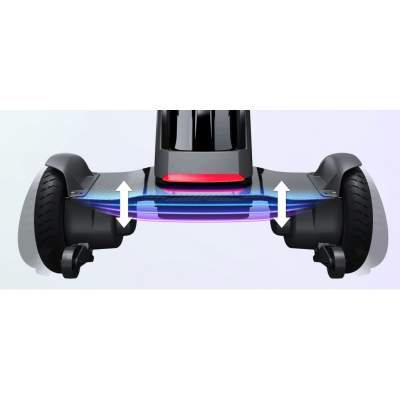
Suspension on all four wheels, even though they are solid
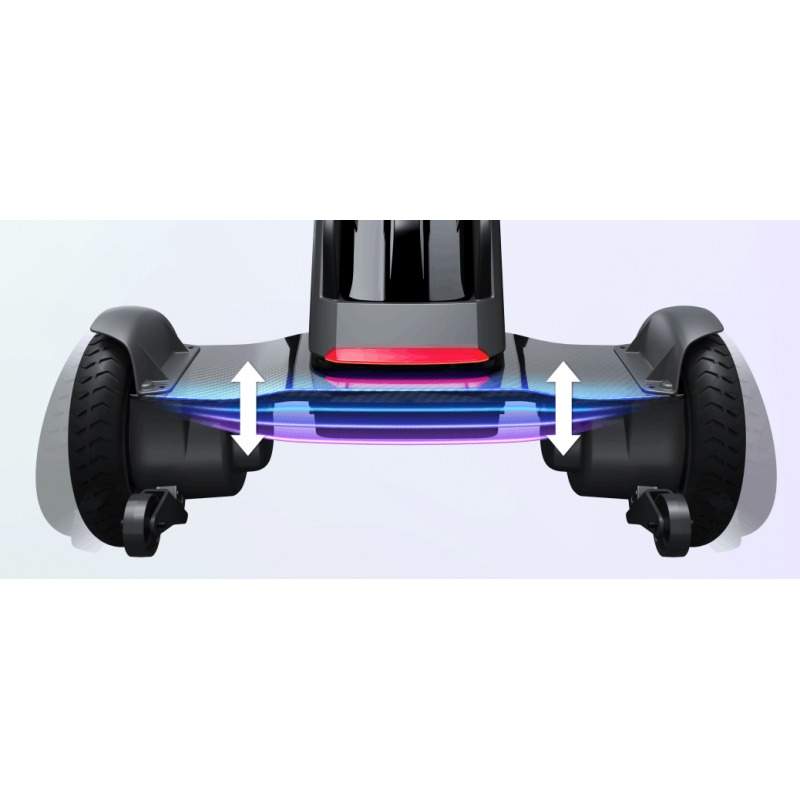
Each wheel moves independently thanks to the Carbon Blade system: a carbon-fibre leaf that flexes and absorbs the impact instead of passing it to the seat. You notice it over a kerb, a pavement joint or uneven ground — and it clears steps of up to 5 cm without the user feeling the hard knock of a rigid wheel.
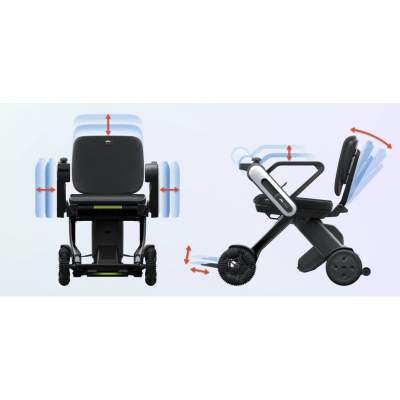
It adapts to you, not the other way round
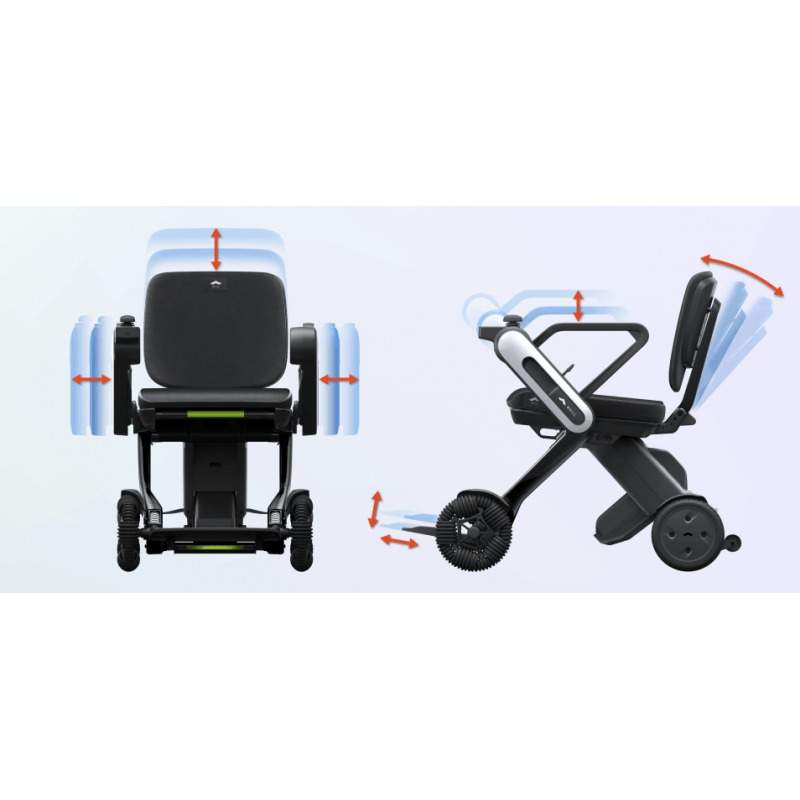
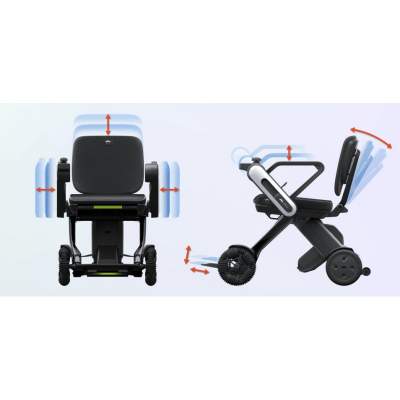
Backrest height and angle, armrest height and footrest height: they adjust separately to find each user's exact posture, with a wider footrest than on the standard Model C. It withstands splashes and rain (IPX5) and is approved for checking in as baggage on commercial flights, so it travels with you without extra paperwork.
Do you not need it to fold?
This chair's big sister, the WHILL Model C2, shares the carbon chassis and omnidirectional wheels but does not fold: if it is always going to stay in the same place and you do not need to put it in a boot, that is the one to consider. Ask us and we will help you decide which fits your day better.
Can you fly with this model?
Yes, and what is more your chair or scooter travels free: on flights within the European Union mobility equipment does not count towards your baggage allowance. What decides the paperwork is the battery:
- Gel or AGM · the easy case. No watt-hour limit, checked in with the unit. The sealed-battery declaration is needed.
- Lithium, up to 300 Wh · with its UN 38.3 certificate. It usually travels fitted to the unit; if the airline asks for it to be removed, it goes with you in the cabin.
- Lithium, above 300 Wh · it can fly, but the airline adds precautions (a fire-resistant bag, or the battery at 25 % charge), and if it insists on removing it there is a ceiling.
To tell you which of the three you are in we need to see the battery of your unit: many models are supplied with a gel or a lithium battery depending on the version. Call us on 976 225 883 or on 659 38 38 38 with the serial number, or send us a photo of the battery label, and we will tell you the exact wattage and get you the manufacturer's certificate.
Before buying your ticket, read how to fly with a power wheelchair or a scooter: the three battery cases, the paperwork and the 48-hour notice to the airline.
Full technical specification
Overall dimensions: 97.8 cm long × 58.7 cm wide × 79.5–86.8 cm high
Weight: 17.8 kg without battery or cushion · 21.6 kg with battery and cushion
Maximum user weight: 136 kg
Maximum speed: 6 km/h
Range: up to 23.4 km (up to 38.5 km with the optional long-range battery)
Maximum gradient: 10º
Turning radius: 81.1 cm
Ground clearance: 75 mm
Maximum kerb height it can climb: 50 mm
Front wheels: omnidirectional
Rear wheels: solid, puncture-free
Suspension: independent on all 4 wheels, Carbon Blade system
Water resistance: IPX5
Approved for air travel: yes
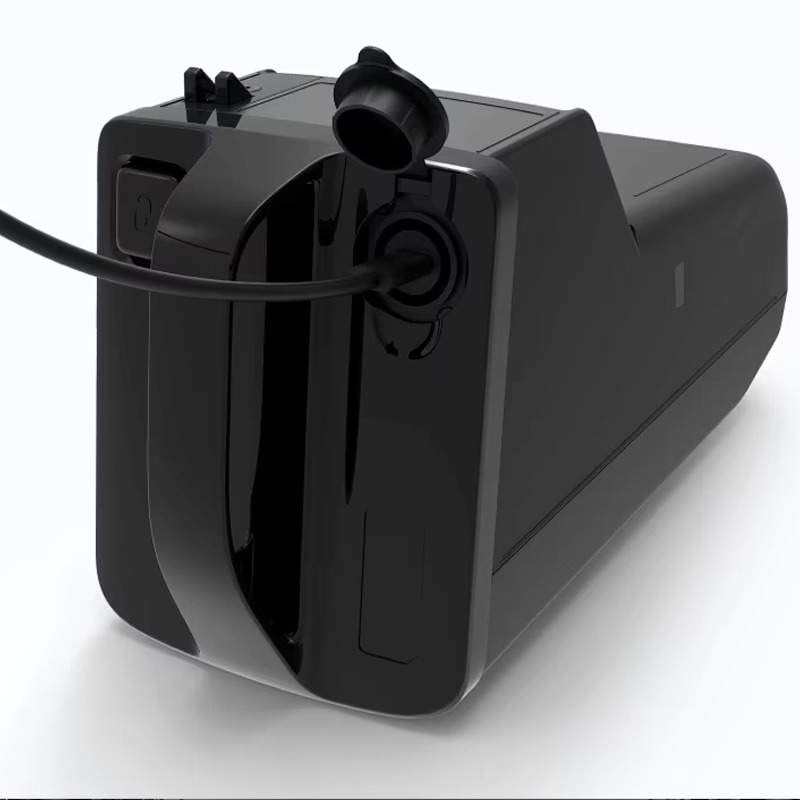
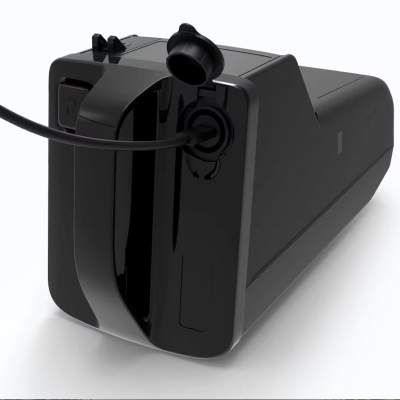
Battery: lithium-ion 25.6 V / 10.6 Ah · full charge in up to 4.5 hours
Optional long-range battery: charges by USB type C
Adjustments: backrest height and angle, armrest height, footrest height, flip-up wide footrest
Folding: in 2 seconds, with one hand, it stands up folded
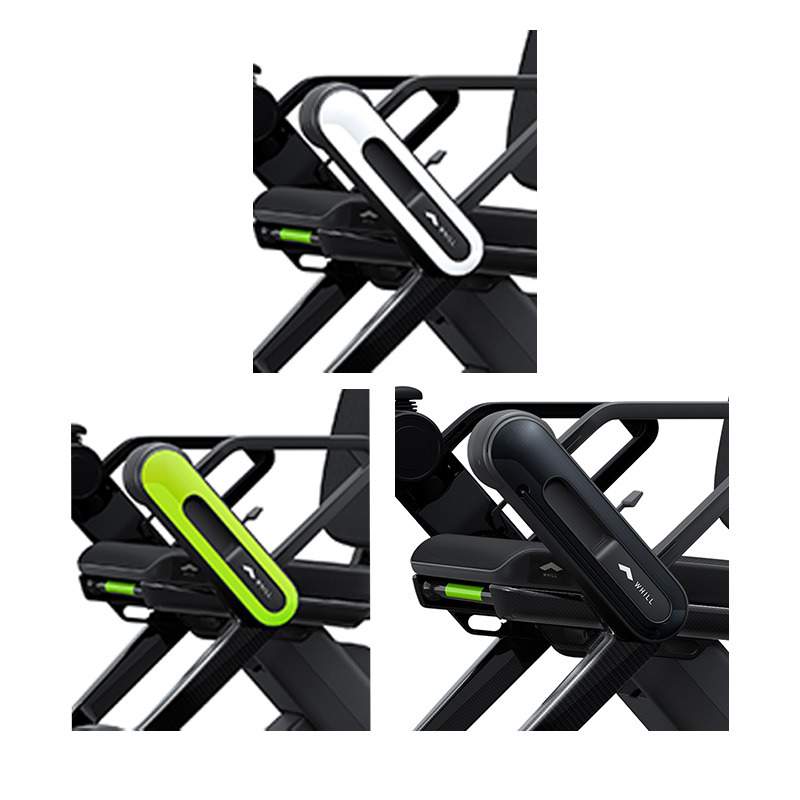
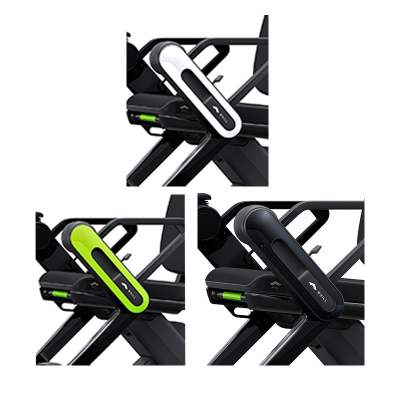
Shells available: white, green and black
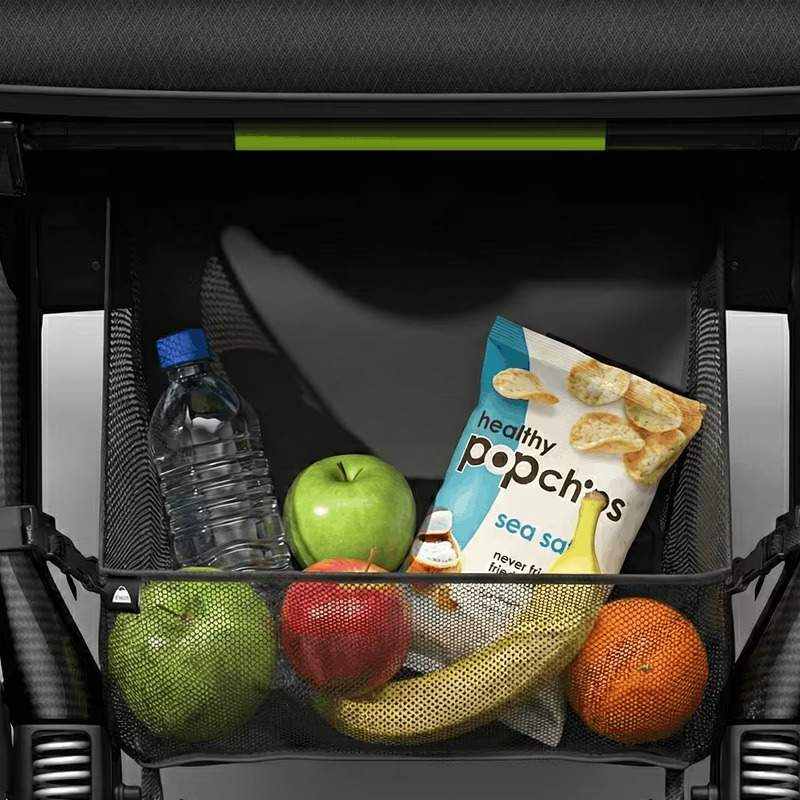
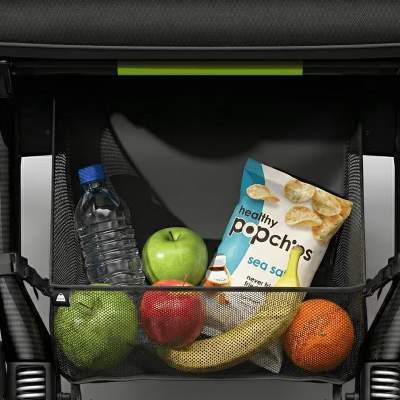
Optional accessories: carrying basket, long-range battery, walking stick holder
Chassis material: moulded carbon fibre
Frequently asked questions
Model C Lite or Model C (non-folding)?
They share the chassis, the omnidirectional front wheels and the Carbon Blade suspension. The difference is the folding: if you are going to move it by car, store it in little space or travel with it, the Lite. If it is always in the same place and you would rather not think about folding, the Model C.
Can I load it into the boot on my own?
It weighs 17.8 kg without the battery and folds with one hand in two seconds, so yes: most users and attendants can lift it into a car boot on their own.
What range does it have day to day?
23.4 km with the standard battery, enough for several trips without recharging. If you need more, there is an optional long-range battery that raises the figure to 38.5 km and charges by USB type C.
Can I check it in on a flight?
Yes, it is approved for air travel as baggage. Even so, we advise telling the airline in advance, as with any assistive device with a lithium battery.
Does it stand the rain, or can I shower with it?
Its IPX5 rating covers splashes and moderate rain outdoors, but it is not a bathroom or shower chair: it must not be wetted with a direct jet of water.
Orthoprosthetic funding (Spain)
Code SRE 000A · product included in the Spanish National Health System catalogue
This chair is in the common orthoprosthetic benefit catalogue with the code SRE 000A, which is the one carried in its own reference. The amount each Spanish region covers varies and a prescription from the rehabilitation doctor is needed.
No reviews
Tap to zoom